
How the solution works
The conversation identifies the request, validates required details and sends a lead, status or context to CRM, a calendar, telephony or another system.
A chatbot is useful when a company repeatedly handles the same enquiries, loses requests between channels or copies conversation outcomes by hand. It guides the user through an agreed scenario, collects structured data and brings in an employee at the right point.
Tell us about the taskWe build chatbots and voice systems that collect structured data, guide a person through the right scenario and hand the result to your business system.
The conversation identifies the request, validates required details and sends a lead, status or context to CRM, a calendar, telephony or another system.
We need enquiry examples, hand-off rules, business hours, approved answers and the available integration methods.
A bot does not have to replace a person. Ambiguous or sensitive requests are handed over, while voice scenarios are validated on real calls.
We first check where automation will make the work easier and where changing the process is enough.
Managers answer the same questions repeatedly.
Requests arrive through several channels and some are lost.
Customers wait for a response outside business hours.
Call and chat outcomes are copied into systems manually.
Interfaces, data, roles and integrations are designed together as one operating system.
Select a stage to see what happens inside the project and what the team receives.
Map the customer journey and manager hand-offs.
The detailed roles, exceptions, security rules and control points are confirmed during discovery.
Exact measures are selected for the process before development begins.
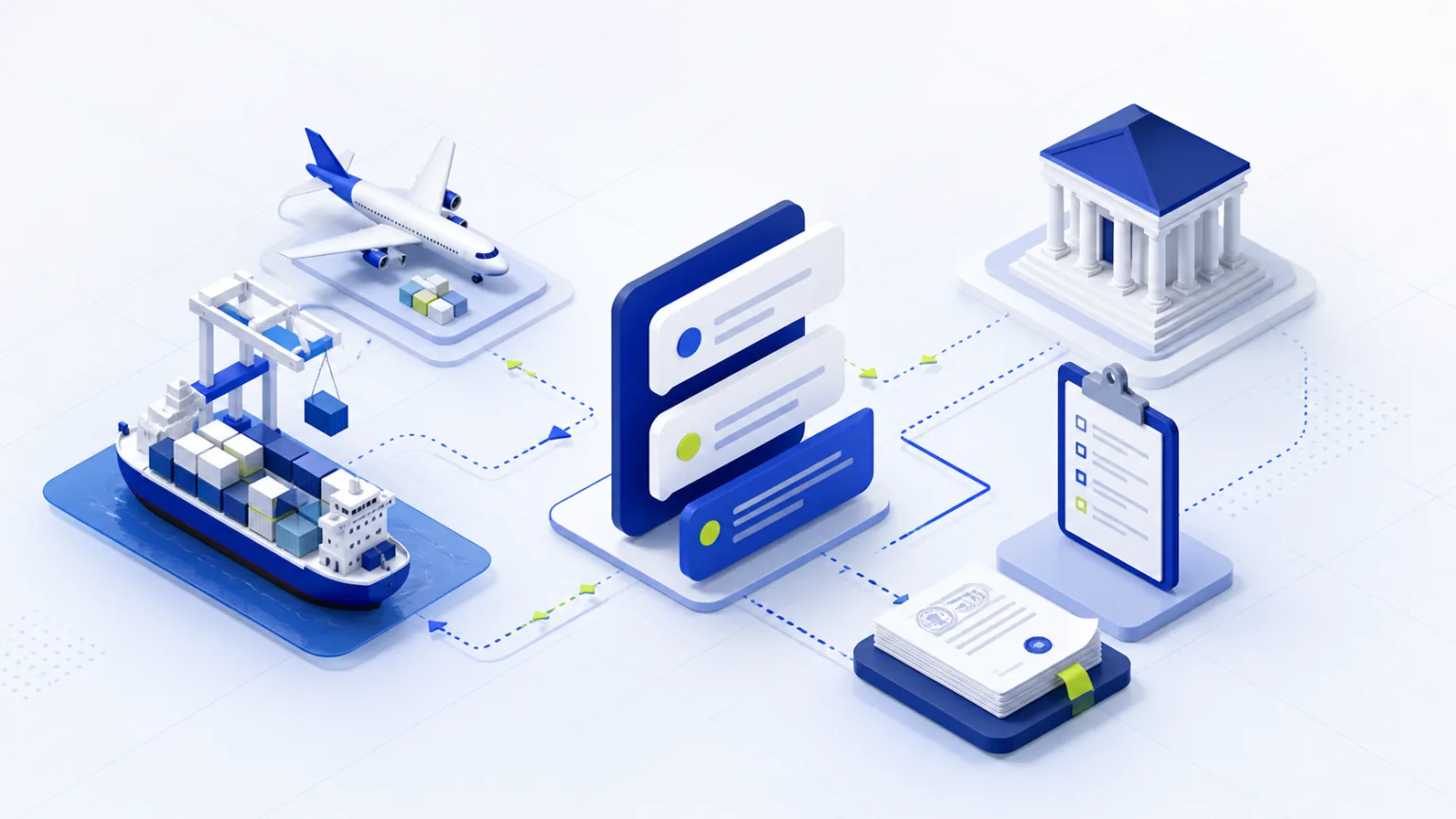
A bot for initial questions about customs clearance and international trade.
View case study
Not necessarily. It usually handles repeatable stages and hands complex cases to a person with context already collected.
Yes, after a short technical review of its code, hosting and integrations.
We choose hosting and third-party services around reliability, access and data requirements.
A rule-based bot fits fixed steps and verifiable conditions. An AI bot can handle varied wording and knowledge search. In a hybrid solution, critical actions follow rules while AI interprets free-form language.
The bot collects and validates required fields, then creates or updates a CRM record under agreed rules. Integration failures and requests that need a decision go to an owner with the relevant context.
Voice automation fits a repeatable scenario with clear outcomes. Ambiguous, sensitive and non-standard conversations should be handed to a person.
We will discuss the goal, constraints and a practical next step without unnecessary technical complexity.